
HydroSoilWise project
In North-West Europe, periods of drought and heavy intense rainfall occur more frequently due to climate change, threatening crop production systems. To address these challenges, farmers need to be supported on three challenges: (I) enhancing soil sponge capacity and water infiltration through soil organic matter increase; (II) Improving water use efficiency through smart irrigation and water management practices; and (III) reducing erosion.
The HydroSoilWise project will provide easy accessible knowledge to farmers in the form of an innovative toolbox to encourage the adoption of sustainable practices. To develop the toolbox, both a literature study and a farmers survey were conducted to gather information on possible techniques that effect the challenges, both research-based knowledge as farmer’s knowledge.
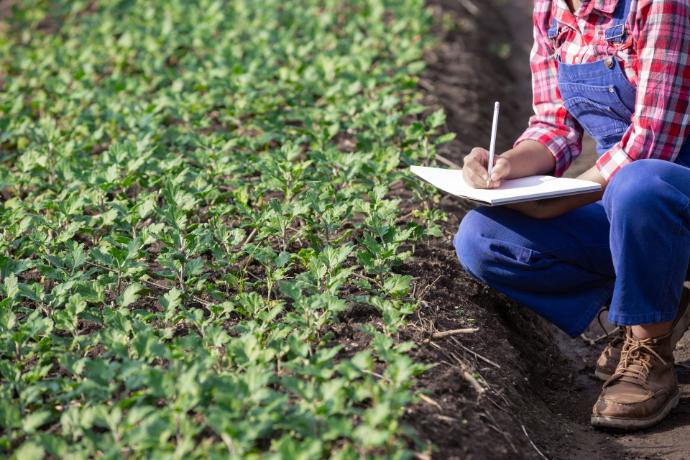
Farmers practices survey
The farmers survey on current practices helped to assess the current state of affairs on their use and farmer’s knowledge. This survey also revealed bottlenecks on the implementation of the techniques. In this way, we ensure that the toolbox is tailored to the needs of the farmers in addressing the above-mentioned challenges. Results of the survey were summarised in a report.
Notable findings from the survey
The results from the survey confirm that the three initial challenges that are defined in the HydroSoilWise project, also reflect the real issues farmers face in the field namely the lack of water and drought periods followed by periods with excessive rains, soils with a low organic matter content, combined with the increasing number of regulations and administrative tasks.
Most of the surveyed farmers mentioned that they are
still looking for advice, feedback and more knowledge, they currently obtain
this primarily through advisory services and online information platforms. This
confirms our idea in HydroSoilWise that developing an online toolbox containing
information sheets, demonstration videos and organising a course with
demonstrations.
64% of the surveyed
farmers already implement different practices to improve their soil organic
matter content, with crop rotations, the use of organic manure and cover
cropping to most implemented ones. Practices such as covering the soil by
mulching and applying soil improvers are less frequently implemented.
Although most of the
surveyed farmers reported implementing water-saving measures on their farms
going from basic practices to effective strategies, the water management
techniques identified in the project were found to be used to a lesser extent
compared to the techniques aimed at improving the soil organic matter content.
38% of the farmers also indicated that there is need for guidance and
information on water use efficiency practices in the field.
The main barriers for implementation erosion control
practices are the lack of erosion sensitive field (18%), unpredictable weather
conditions (20%), regulations and policy restrictions and the high
cost of application (14%). If farmers did have erosion
susceptible fields, buffer zones were the primary measure used. However, these
results should be interpreted with some caution, as buffer zones are also
required to be established along rivers/streams
In general, the
results show that the techniques that improve soil organic matter are more
widely used than the techniques that improve water use efficiency
and reduce erosion. A lot of the techniques that build up soil organic
matter are well known and studied for their benefits to the cropping systems,
while we see that techniques that require more technology, have a high cost,
are time consuming and less well studied, are implemented less frequently in
practice. Other challenges that prevent farmers
from investing are regulation restrictions and changing weather conditions with
more extremes.

Literature database
A database of consulted literature was developed with a brief summary of the read literature in terms of crop type, soil type, and observed effects of the techniques on yield, plant and soil quality, organized by technique. This database will form the basis of the technical datasheets of the toolbox.